Garden Notes
Why would a butterfly taste a leaf it won’t eat?
A flower can offer a butterfly a meal. A leaf can offer something for the next generation. Female butterflies can use chemical information from plants when choosing where to lay eggs, and some of that information arrives through their feet. Carleton University Biology
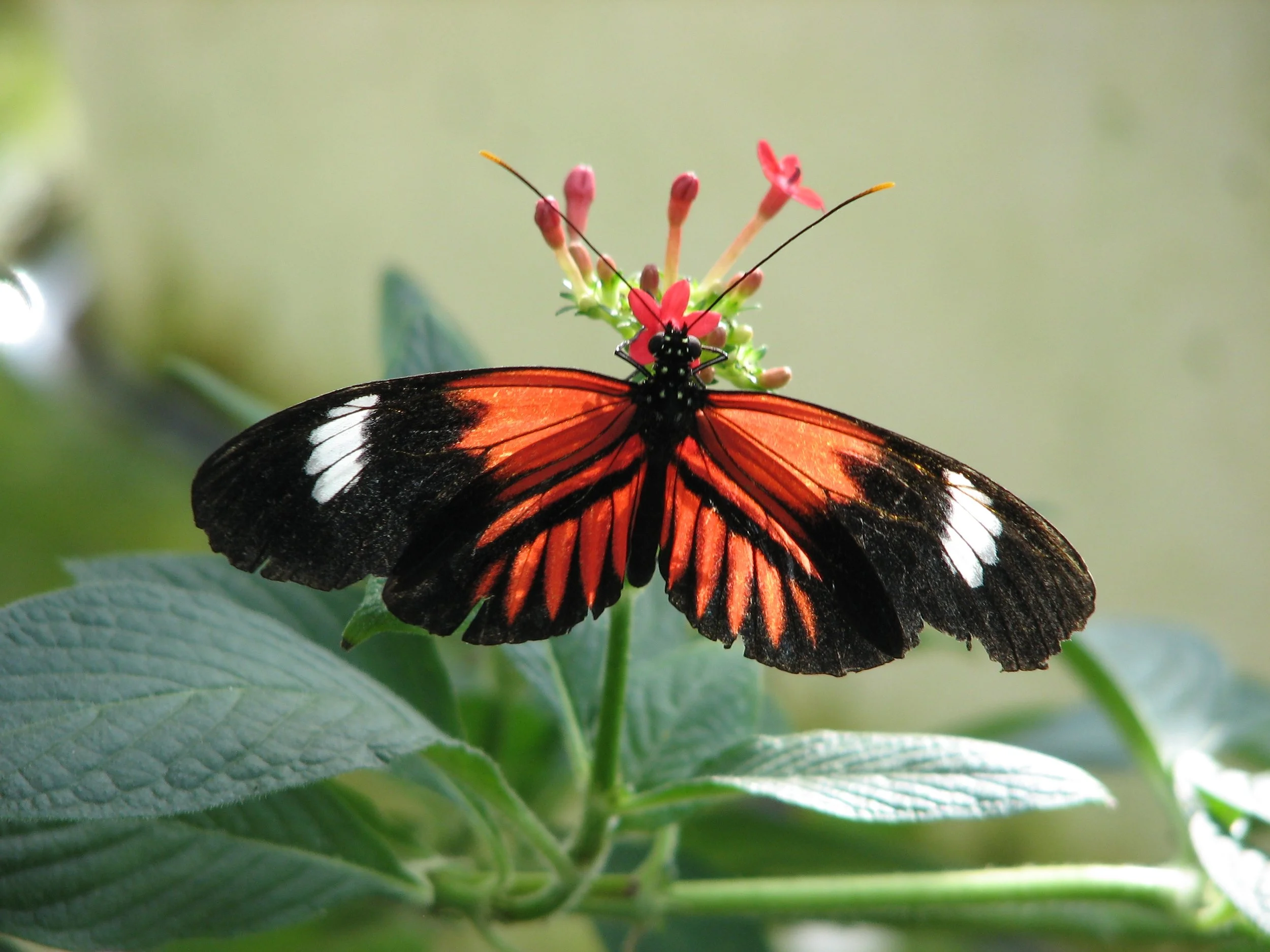
Heliconius melpomene.
Look closer at the foot
The black-and-white image below shows a female Heliconius melpomene front foot under an electron microscope. Follow the white arrow to the cluster of small, curved sensory hairs beside the larger spines.
In a 2013 study, researchers documented these taste-sensing hair clusters on female forefeet. They also found more kinds of taste-receptor genes active in female legs than in male legs. These are observations of anatomy and gene expression, helping explain how females gather information from plants. Read the study
The scale bar marked 200 micrometers represents just 0.2 millimeters. Use that bar to appreciate how small this sensory equipment is.
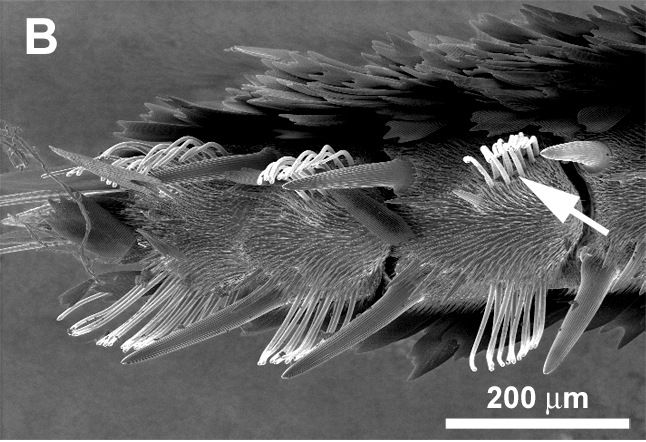
Female H. melpomene front foot · electron micrograph.
Who is the leaf for?
For a female checking an egg-laying site, the question is whether the plant can feed her future caterpillars. That is a different job from finding an adult meal. Butterflies also have taste-sensing structures on their mouthparts. How butterfly tasting works
Two questions for your garden
When looking at a “butterfly-friendly” plant, ask:
Does it offer nectar for visiting adults?
Is it a host plant for caterpillars of butterflies found here?
Those roles can overlap, but one does not guarantee the other. University of Minnesota Extension notes that caterpillars have limited host ranges and that a plant recommended elsewhere may not suit local butterflies. Start with the butterflies in your area, then check their host plants using a regional extension guide. Butterfly-garden guidance
A useful garden supports more than the colorful visitors you first notice.
Our collection brings the color and character of garden life to mugs, prints and other everyday objects.
Photo and image credits
Photo: “Heliconius melpomene” by Wildcat Dunny, CC BY 2.0. Resized for display.
Micrograph: Briscoe et al. (2013), Figure 2B, CC BY 4.0. Panel cropped and resized for display; original arrow and scale retained.